Translate Arabic Audio to English
Upload the Arabic recording, choose English under “Also translate into”, and you get the Arabic transcript, written right to left, and an English translation of every line, aligned by timestamp and speaker.
Modern Standard Arabic and spoken dialects · audio and video · files up to 8 GB
Same lines, same times, now in English
أعدنا بناء الاستوديو في الشتاء.We rebuilt the studio in winter.
ومنذ ذلك الحين تبدو كل حلقة أدفأ.And since then every episode sounds warmer.
يلاحظ الناس ذلك على الفور.People hear it right away.
Timestamps and speakers kept
Click or drag & drop to upload your audio or videoTap to upload your audio or video
MP3, MP4, M4A, MOV, MKV, WEBM, AVI, WAV, FLAC, AAC, OGG, OPUS, WMA, WMV
No credit card required · Stored in the EU · Never used for AI training
Arabic Audio Translated to English


Broadcasts and speeches in Modern Standard Arabic become English text analysts can read, quote and archive.
Researchers, NGOs and journalists keep the Arabic for accuracy and work from the English.
Voice notes and recordings from relatives become English text that younger family members can read.
Arabic to English: Where to Look Closely
Arabic covers a formal standard and many spoken dialects. That matters more than anything else for the result.
- Standard vs dialect
- Modern Standard Arabic is recognised best; Egyptian, Levantine, Gulf and Maghrebi speech need more review
- One setting
- All varieties are transcribed under Arabic; there is no separate dialect option
- Direction
- The Arabic transcript reads right to left; the English beside it reads left to right
- Names
- Transliteration varies (Mohammed, Muhammad); set the spelling you use in My terms
- Gender
- Arabic marks “you” as masculine or feminine; English “you” loses that detail
- Short vowels
- The transcript is written without vowel marks, as Arabic usually is
- Output
- Arabic and English with the same timestamps, exported one language per file
Before You Upload Arabic Audio
Three things that change how much you will need to correct.
Dialect
Expect more fixes with strong dialect
Speech close to Modern Standard Arabic comes out cleanest. Plan time to review a strongly dialectal conversation.
Names
Add names and places to My terms
Names are where Arabic-to-English spelling varies most; a saved spelling keeps them identical throughout.
Subtitles
Check right-to-left export
If you export the Arabic as subtitles, preview them in your player: some players handle right-to-left text better than others.
How to Translate Arabic Audio to English
From recording to English text in three steps.
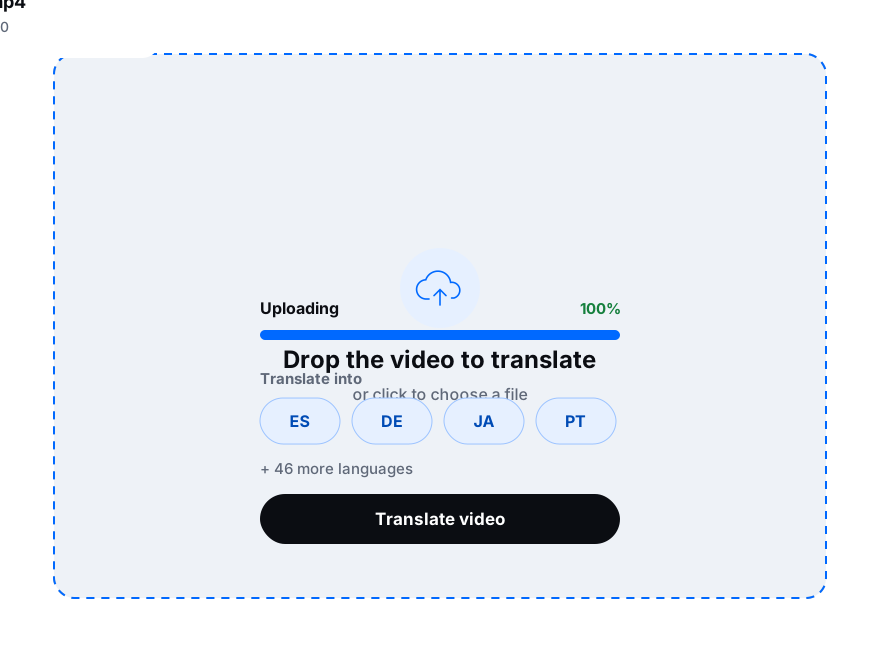
Add an audio or video file up to 8 GB, or a link from YouTube, Google Drive or Dropbox.
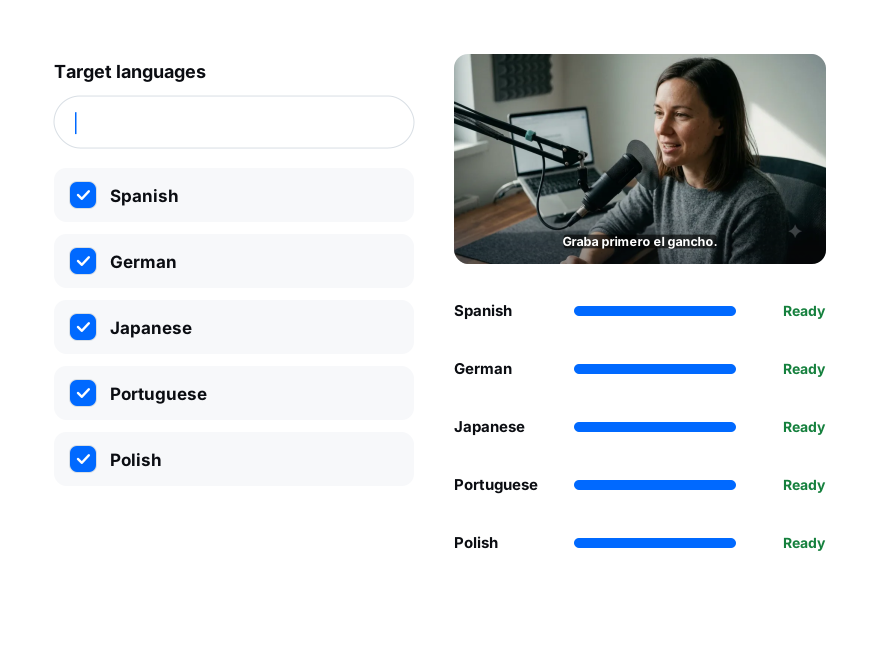
Set Arabic as the spoken language and tick English under “Also translate into”.
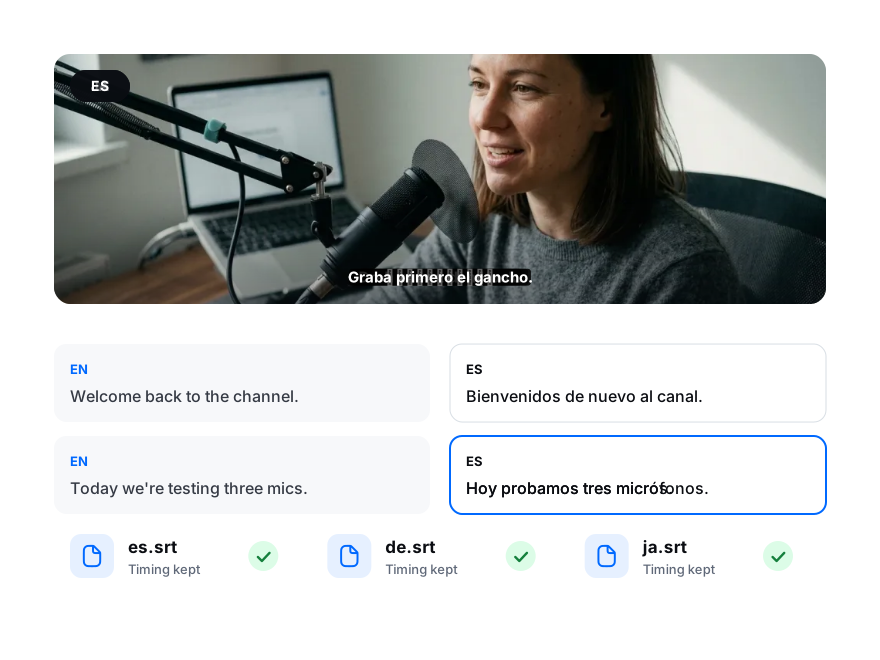
Compare names with the Arabic, then export the English as text, a document or subtitles.