Film Transcription for Footage, Interviews and Takes
Upload a clip, an interview or a whole film and get a transcript with speakers named and a timecode on every line, measured from the start of the file. Search it for the line you need, export DOCX for the paper edit, or SRT to bring the text into Premiere Pro, DaVinci Resolve or Final Cut Pro as captions.
MOV and MP4 from the camera, WAV from the recorder · files up to 8 GB · 120+ languages
Every answer, with who said it and when
Where were you when the mill closed?
On the night shift. We heard it on the radio.
Nobody came to tell us in person.
Click or drag & drop to upload your audio or videoTap to upload your audio or video
MP3, MP4, M4A, MOV, MKV, WEBM, AVI, WAV, FLAC, AAC, OGG, OPUS, WMA, WMV
No credit card required · Stored in the EU · Never used for AI training
Where Transcripts Save Time in Post


Hours of interviews become text the director can read and mark up. Pick the answers for the cut on paper, then find them on the timeline by timecode.
Search the transcript for the line and jump to every place it was said, instead of scrubbing through each take.
Export SRT for a festival screener or an online cut, and translate it into 50+ languages on paid plans with the same timing.
What You Get, and What Post Tools Expect
An honest comparison with what editors usually need, checked in the app in November 2026.
- Timecode
- Counted from 0:00 of each uploaded file, to the millisecond: 00:01:14,200 in SRT, [00:01:14.200] in TXT
- Source timecode
- Not read: a clip that starts at 01:00:00:00 on your timeline still starts at 0:00 in the transcript, and there are no frame numbers
- Into the edit
- SRT or VTT, which Premiere Pro, DaVinci Resolve and Final Cut Pro import as captions; no EDL, XML or marker export
- Speakers
- Two to five voices told apart when you turn on speaker recognition; rename them once
- Paper edit
- DOCX or PDF with names and timecodes, or only one person’s lines, such as the interviewee’s answers
- Long files
- Up to 8 GB per file, so a full interview or a feature-length cut goes in whole
- Unreleased footage
- Processed and stored in the EU, encrypted in transit, never used to train AI, deleted when you choose
- Plans
- TXT and SRT export with the 30 free minutes; DOCX, PDF and translation on paid plans
Before You Upload Footage
Most transcript errors in film come from the sound, and most lost time from the timecode.
Sound
Upload the clean dialogue
Camera scratch audio and the final mix with music both cost accuracy. Use the sound recorder’s WAV or a dialogue stem when you have one.
Timecode
Mind the offset
The transcript starts at 0:00. If your sequence starts at 01:00:00:00, add the hour when you look up a line, or place the SRT at the start of the clip.
Files
One file per interview or take
Name files by scene, take or interviewee before uploading; the file name is how you find the transcript later.
Rights
Only footage you may use
Transcribe your own material or footage you are licensed to work with. Streaming services such as Netflix and Prime Video are not accepted as links.
How to Transcribe Film Footage
From recording to finished text in three steps.
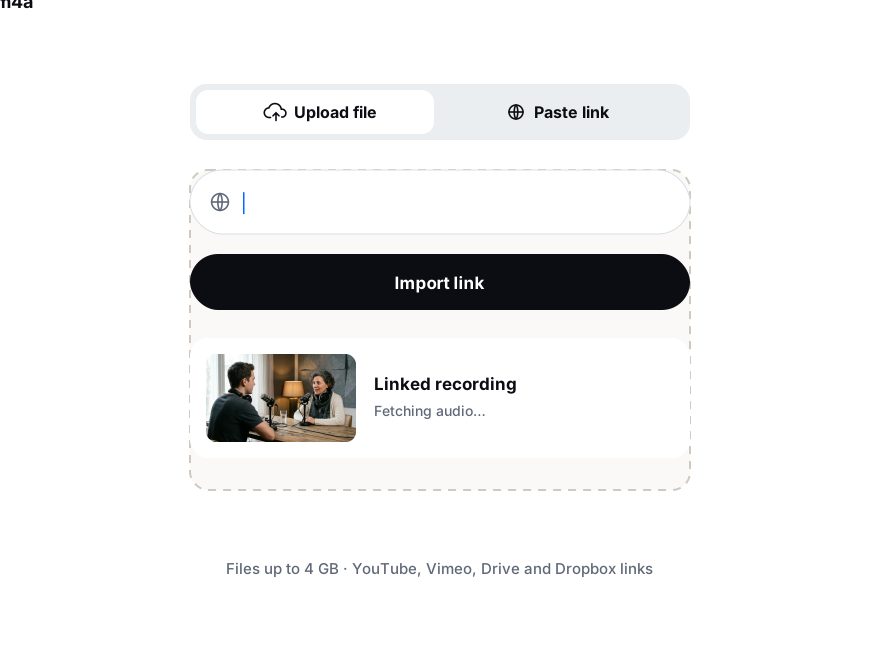
Add the clip, interview or exported cut, up to 8 GB, and turn on speaker recognition for interviews.
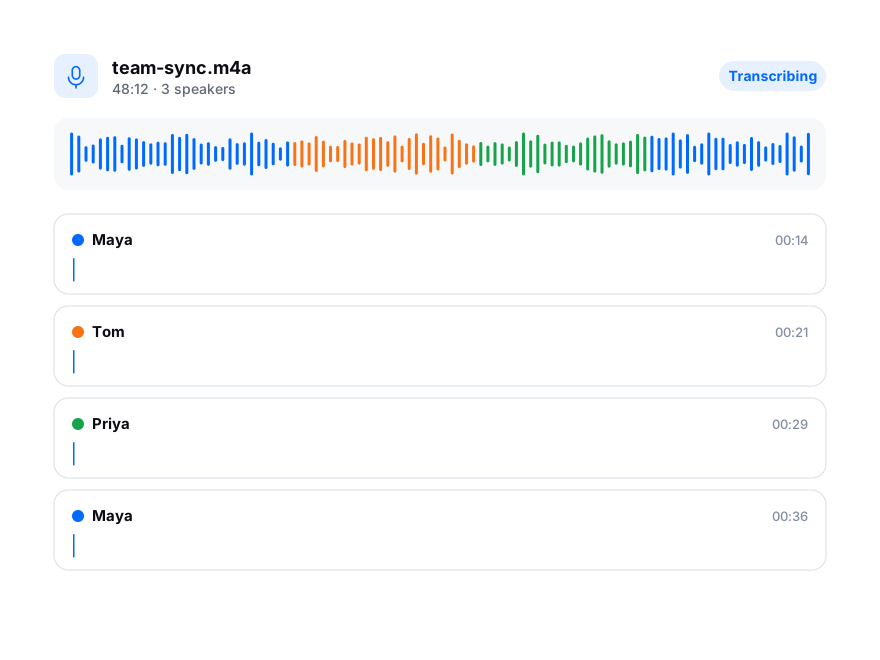
Rename the speakers, fix names, places and jargon while the picture plays.
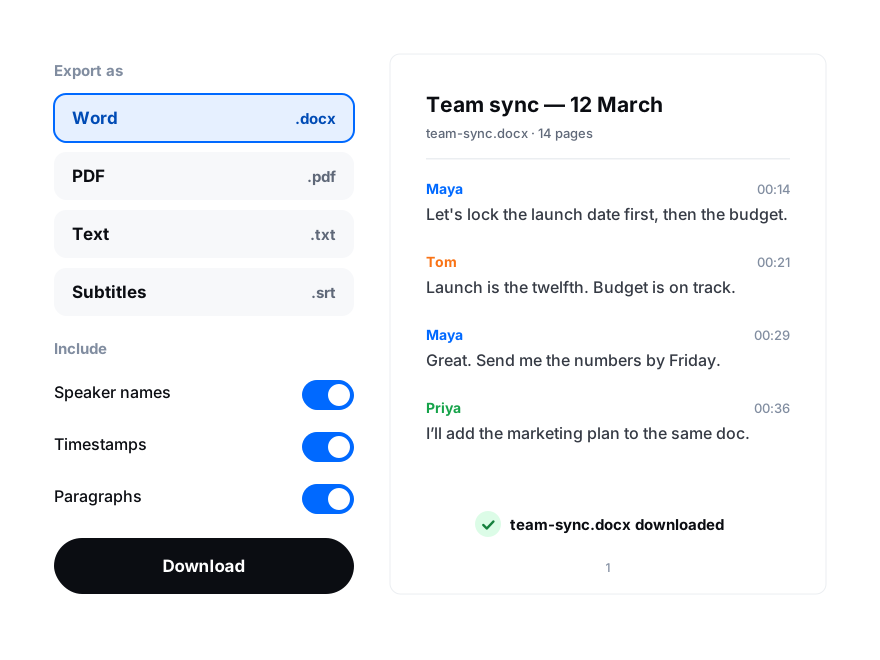
DOCX for the paper edit, SRT to bring the text into Premiere Pro, Resolve or Final Cut Pro.